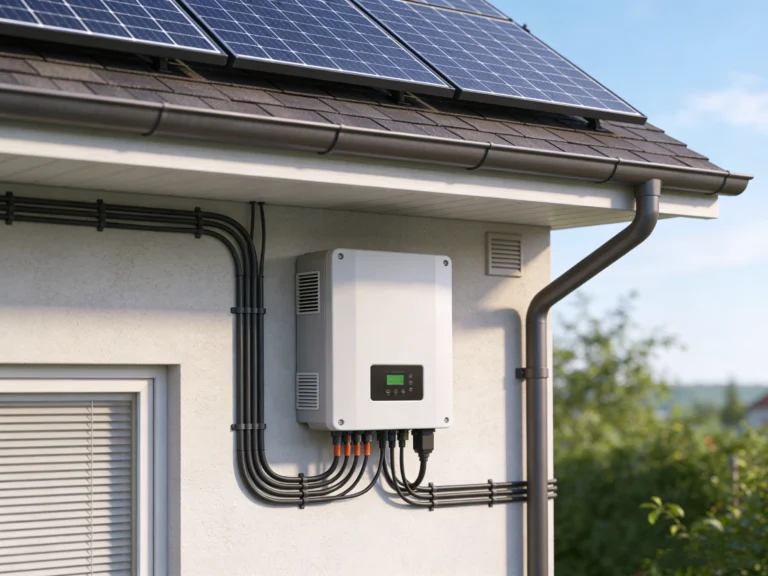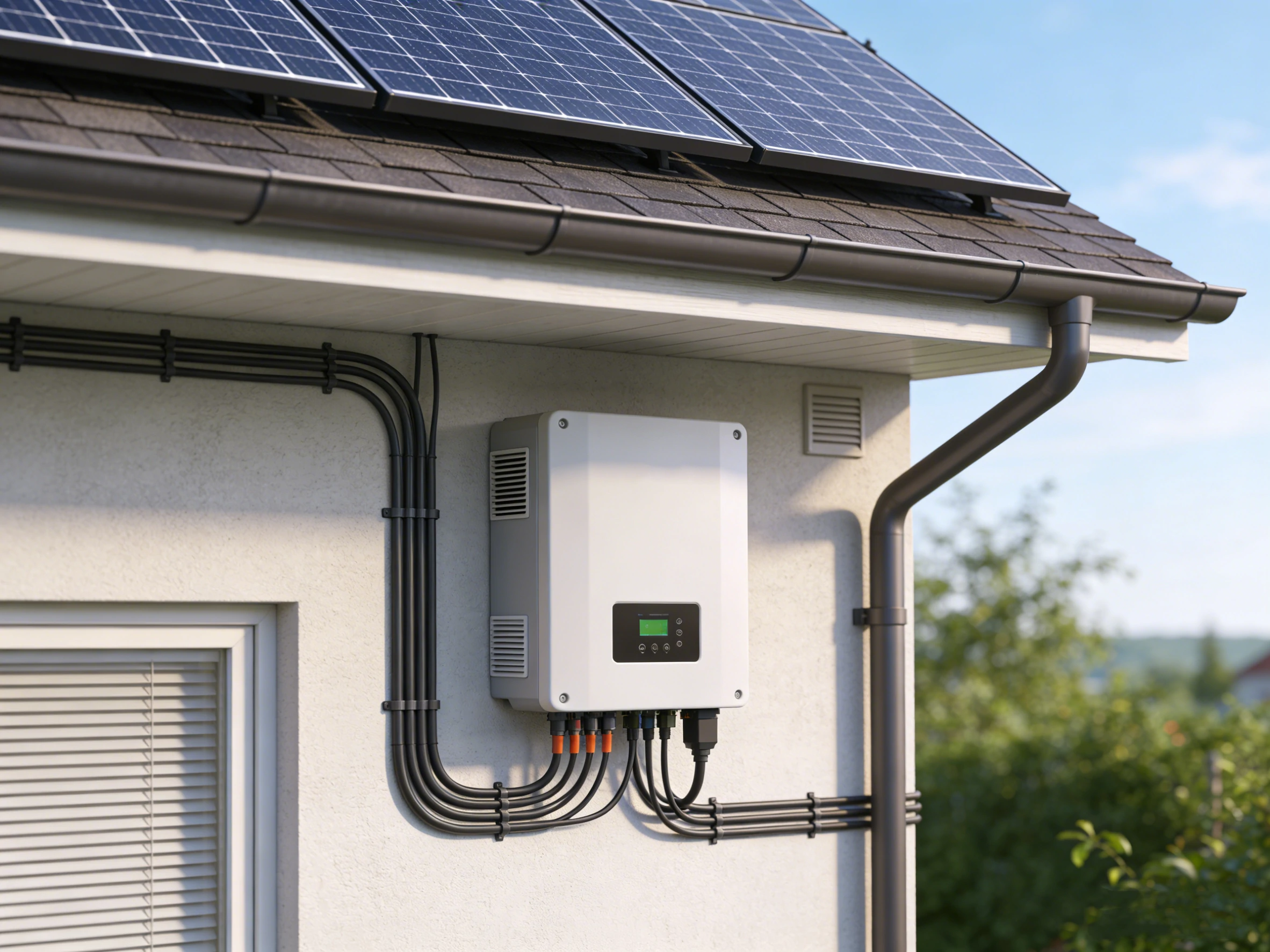
Solar Inverter
solar inverter panels are only one part of a solar power system. They generate electricity, but the electricity they produce is not usually in the form that household appliances can use directly. That is where a solar inverter becomes essential.
A solar inverter converts the direct current (DC) electricity produced by solar panels into alternating current (AC), which can power appliances, feed electricity into the grid, or work with a battery system. The inverter can also provide important information about system performance and, depending on the model, manage batteries and backup power.
Choosing an inverter deserves as much attention as choosing solar panels. A system with good panels but an unsuitable inverter can suffer from poor performance, limited backup capability, or difficult maintenance.
What Is a Solar Inverter?
A solar inverter is an electronic device that converts the DC electricity generated by photovoltaic (PV) solar panels into AC electricity.
Solar panels produce DC power because of the way their photovoltaic cells generate electricity. Most homes, businesses, and electrical grids, however, use AC power. The inverter performs the conversion between these two forms of electricity.
Modern inverters can do much more than simple DC-to-AC conversion. Depending on the type, they may:
- Track the solar panels’ maximum power point
- Monitor electricity production
- Control battery charging and discharging
- Provide backup power
- Synchronize with the utility grid
- Detect certain electrical faults
- Shut down under unsafe grid conditions
- Help optimize the output of individual panels or groups of panels
The inverter is therefore one of the central components of a complete solar installation.
How Does a Solar Inverter Work?
The basic process is straightforward.
- Solar panels generate DC electricity.
- The inverter receives the DC electricity.
- The inverter converts DC into AC electricity.
- The AC electricity powers connected appliances.
- Extra electricity can be sent to batteries or, where permitted, the electrical grid.
Inside the inverter, electronic switching components rapidly control the electrical current. Sophisticated control systems then produce an AC waveform suitable for the intended electrical system.
The inverter also constantly monitors voltage, current, frequency, temperature, and other operating conditions. If the system detects an unsafe condition, it can reduce output or shut down.
Why a Solar Inverter Matters
The inverter has a direct influence on how effectively a solar system can use the electricity produced by its panels.
A panel may have a high rated output under laboratory conditions, but actual production changes throughout the day. Clouds, heat, shading, panel orientation, dust, and other factors affect output.
The inverter’s maximum power point tracking (MPPT) system helps extract available energy from the solar array as conditions change.
This is one reason simply buying the highest-wattage solar panels is not enough. The panels, inverter, electrical wiring, battery system, and installation all need to work together.
Main Types of Solar Inverters
Different solar systems require different inverter designs. The most common categories are string inverters, microinverters, hybrid inverters, and off-grid inverters.
1. String Inverter
A string inverter connects multiple solar panels together in a series, known as a string. The combined DC electricity is then sent to a central inverter.
This arrangement is popular because it can be relatively simple and cost-effective.
Advantages:
- Straightforward system design
- Generally easier to maintain
- Often lower installation cost
- Suitable for many homes and businesses
Limitations:
- Shading on one or more panels can affect the output of the string
- Panel-level monitoring may be limited
- Correct string design is important
String inverters can work particularly well when panels receive fairly consistent sunlight and are installed in the same orientation.
2. Microinverter
A microinverter is installed at or near each individual solar panel. Instead of sending the panels’ DC output to one central inverter, each panel converts its electricity into AC.
This can be useful on roofs with multiple orientations or partial shading.
Advantages:
- Panel-level power conversion
- Better handling of different roof orientations
- Panel-level monitoring is often available
- Shading on one panel has less direct effect on other panels
Limitations:
- More electronic equipment is installed on the roof
- Initial costs can be higher
- Maintenance may require access to individual panel locations
Microinverters are worth considering when roof conditions make a conventional string configuration less attractive.
3. Hybrid Inverter
A hybrid inverter combines solar power management with battery storage capabilities.
It can coordinate electricity from solar panels, batteries, household loads, and, depending on the system, the utility grid.
This makes hybrid systems particularly useful for homeowners who want solar generation plus energy storage.
A hybrid inverter may allow excess solar energy generated during the day to charge a battery. The stored energy can then be used later when solar production falls.
However, not every hybrid inverter provides the same backup capabilities. Some can power selected circuits during a grid outage, while others require additional equipment for whole-home backup.
4. Off-Grid Inverter
An off-grid inverter is designed for systems that operate independently of the utility grid.
These systems normally require batteries because solar production changes throughout the day and cannot be relied upon continuously.
An off-grid setup can be useful for remote buildings, agricultural applications, or locations where grid electricity is unavailable or unreliable.
The system must be carefully sized because the inverter needs to handle both normal loads and potentially high starting currents from appliances such as pumps, refrigerators, and motors.
Grid-Tied vs. Off-Grid Solar Inverters
The biggest difference is the relationship with the utility grid.
A grid-tied inverter works with the electrical grid and normally shuts down when the grid goes offline unless the system has a properly designed backup arrangement.
An off-grid inverter is designed to create and manage its own electrical supply, usually using batteries.
There is also a middle ground: a hybrid system that can interact with the grid while also supporting battery storage and backup loads.
For a typical home, the right choice depends on whether the main goal is reducing electricity purchases, maintaining power during outages, operating independently from the grid, or combining several of these goals.
What Size Solar Inverter Do You Need?
Inverter sizing should not be based only on the total wattage of the appliances in the home.
The installer needs to consider:
- Solar panel capacity
- Expected solar production
- Household electricity consumption
- Maximum simultaneous load
- Battery capacity, if applicable
- Surge requirements
- Local electrical standards
- Grid requirements
- Future expansion plans
- Roof orientation and shading
For example, a home may have several appliances that rarely operate at the same time. A water pump or refrigerator may also have a short startup surge that is considerably higher than its normal running power.
For this reason, inverter selection should be based on the actual electrical design rather than a simple appliance-wattage calculation.
Important Solar Inverter Features
When comparing models, look beyond the headline power rating.
MPPT Inputs
Multiple MPPTs can be useful when solar panels are installed on different roof orientations or experience different shading conditions.
For example, panels facing different directions may perform differently throughout the day. Separate MPPT inputs can allow the inverter to manage these groups more effectively.
Efficiency
Inverters consume a small amount of energy while converting and managing electricity. A higher-efficiency model can reduce conversion losses.
However, published efficiency figures should not be the only factor in your decision. Installation quality, operating temperature, load patterns, and system design also influence real-world performance.
Battery Compatibility
If you may add batteries later, check whether the inverter supports the battery technology and voltage range you expect to use.
Not every inverter is compatible with every battery.
Monitoring
A good monitoring system can show solar production, household consumption, battery status, and system warnings.
This is especially useful when troubleshooting. A sudden drop in production can sometimes be identified through monitoring before someone physically inspects the system.
Backup Capability
Do not assume that a solar inverter automatically provides electricity during a grid outage.
Many standard grid-tied systems shut down when the grid fails for safety reasons. If backup power is important, make sure the inverter and the rest of the system are specifically designed for that purpose.
Common Solar Inverter Mistakes
Choosing Only on Price
A cheaper inverter may look attractive initially, but purchase price is only part of the cost.
Consider warranty terms, local technical support, replacement availability, monitoring features, efficiency, and compatibility with the rest of the system.
Ignoring Shading
A roof that looks sunny in the morning may experience shade later in the day.
Trees, nearby buildings, water tanks, walls, and other structures can affect production. Shading should be considered before deciding between a string inverter and panel-level solutions.
Oversizing Without a Plan
Installing a very large inverter does not automatically produce more electricity. The inverter needs an appropriately designed solar array and electrical system.
An oversized inverter can also mean paying for capacity that the solar array rarely uses.
Forgetting Future Expansion
If you expect to add more panels or batteries later, mention this before installation.
The initial system can sometimes be designed to accommodate future upgrades, but not every inverter or electrical installation can be expanded easily.
Assuming Solar Means Automatic Backup
Solar panels do not necessarily keep a home powered during a blackout.
A grid-tied inverter generally needs the grid to be present unless the system includes appropriate backup equipment and energy storage.
How to Choose the Right Solar Inverter
Start with your actual goal.
If your priority is reducing grid electricity consumption, a conventional grid-tied configuration may be appropriate.
If power outages are a major concern, look at hybrid inverters and battery-compatible systems with a properly designed backup output.
If you need a completely independent system, an off-grid inverter and correctly sized battery bank may be more appropriate.
Next, evaluate the physical installation. Consider roof direction, shading, available space, cable distances, environmental conditions, and future expansion.
Finally, compare the complete system rather than the inverter alone. A good inverter cannot compensate for poor panel placement, undersized cables, inadequate protection, or poor installation practices.
Solar Inverter Maintenance
Solar inverters generally require less routine maintenance than generators or combustion-based power equipment, but they should not simply be ignored.
Keep the area around the inverter clear so that heat can dissipate properly. Avoid blocking ventilation openings or placing objects directly against the unit.
Watch for warning messages, unusual noises, overheating, repeated shutdowns, or unexplained drops in solar production.
Electrical connections and protective equipment should be inspected by a qualified professional according to the equipment manufacturer’s requirements and local regulations.
How Long Does a Solar Inverter Last?
The useful life of an inverter depends on its design, operating environment, installation quality, workload, and maintenance.
Inverters can experience more thermal stress than solar panels because they contain active electronic components. High temperatures, poor ventilation, moisture, dust, and electrical problems can affect reliability.
When comparing products, look at the manufacturer’s warranty and local service availability rather than assuming every inverter will last for the same number of years.
Are Solar Inverters Safe?
A properly installed and maintained inverter is designed to operate safely within its specified electrical limits.
However, solar systems involve potentially dangerous DC and AC voltages. Solar panels can continue producing electricity whenever sufficient light is available, so electrical work should not be treated as a simple DIY project.
Use qualified installers and ensure that the system includes appropriate electrical protection, grounding, isolation, and other safety equipment required by applicable standards.
Frequently Asked Questions
What does a solar inverter do?
A solar inverter converts the DC electricity produced by solar panels into AC electricity that can be used by household appliances, supplied to the grid, or managed alongside a battery system.
Which solar inverter is best for a home?
There is no single best model for every home. The right choice depends on the solar array, roof layout, shading, electricity usage, backup requirements, battery plans, and local grid conditions.
Can a solar inverter work without batteries?
Yes. Many grid-tied solar systems operate without batteries. Solar energy can be used immediately, while excess electricity may be exported to the grid where local rules and the electrical system allow it.
Does a solar inverter work during a power outage?
A standard grid-tied inverter usually shuts down during a grid outage. Backup operation requires an inverter and system configuration specifically designed to safely provide power when the grid is unavailable.
How long does a solar inverter last?
Lifespan varies by model, environment, operating conditions, and maintenance. The manufacturer’s warranty and service support are useful indicators when comparing inverter options.
Can I add batteries to an existing solar system?
Sometimes. It depends on the existing inverter, wiring, battery compatibility, and system architecture. Some systems can be upgraded relatively easily, while others may require additional equipment or an inverter replacement.
Is a bigger solar inverter always better?
No. The inverter should be appropriately matched to the solar array and electrical loads. Buying substantially more capacity than the system needs can increase cost without providing a corresponding benefit.
What should I check before buying a solar inverter?
Check the inverter’s capacity, MPPT configuration, efficiency, battery compatibility, monitoring features, backup capability, warranty, environmental rating, service availability, and compatibility with your local electrical system.
Final Thoughts
A solar inverter is much more than a box that converts electricity. It sits at the center of the solar system, connecting the panels with household loads, batteries, and potentially the utility grid.
The best choice depends on how you intend to use solar power. A straightforward grid-connected home may need a different solution from a property that requires battery backup or complete off-grid operation.
Before purchasing, evaluate the whole system rather than focusing on a single specification or the lowest upfront price. Proper sizing, good installation, reliable protection, and accessible technical support can make a significant difference to long-term performance.
About the Author