Begonia
Begonia is one of those plants that can look completely different depending on the variety. Some are grown for colorful flowers, while others are prized for striking leaves with unusual patterns, textures, and colors. They can brighten a windowsill, patio, hanging basket, garden bed, or shaded corner of the home.
The good news is that most begonias are not difficult to grow once you understand what they need. The biggest mistakes usually involve too much water, harsh sunlight, poor drainage, or choosing a variety that does not suit the growing conditions.
This guide explains how to choose, plant, water, feed, propagate, and maintain begonia plants while avoiding the problems that commonly affect them.
What Is a Begonia?
Begonia is a large group of flowering plants belonging to the genus Begonia. There are many species and cultivated varieties, with considerable differences in size, flowers, foliage, and growing habits.
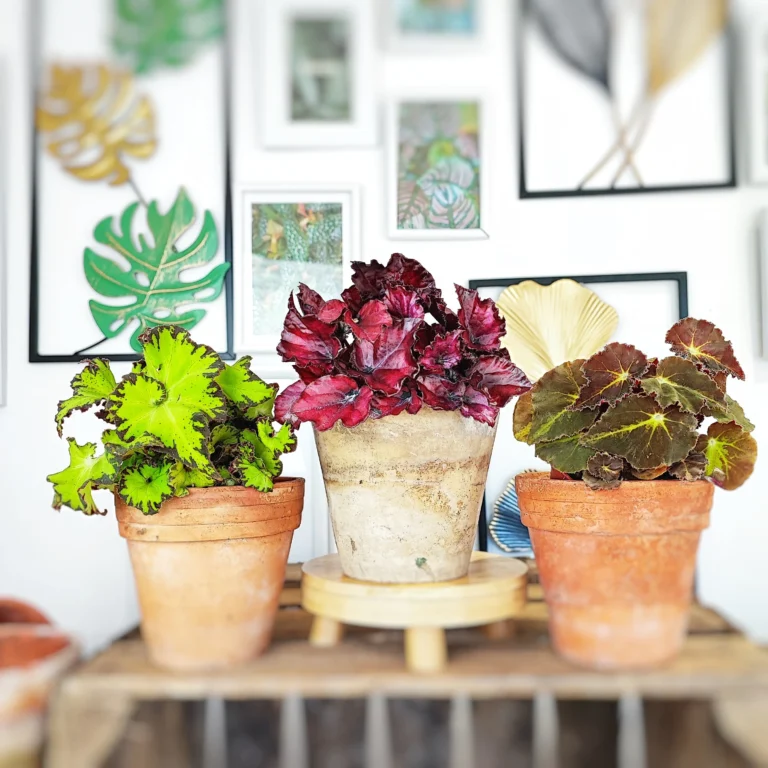
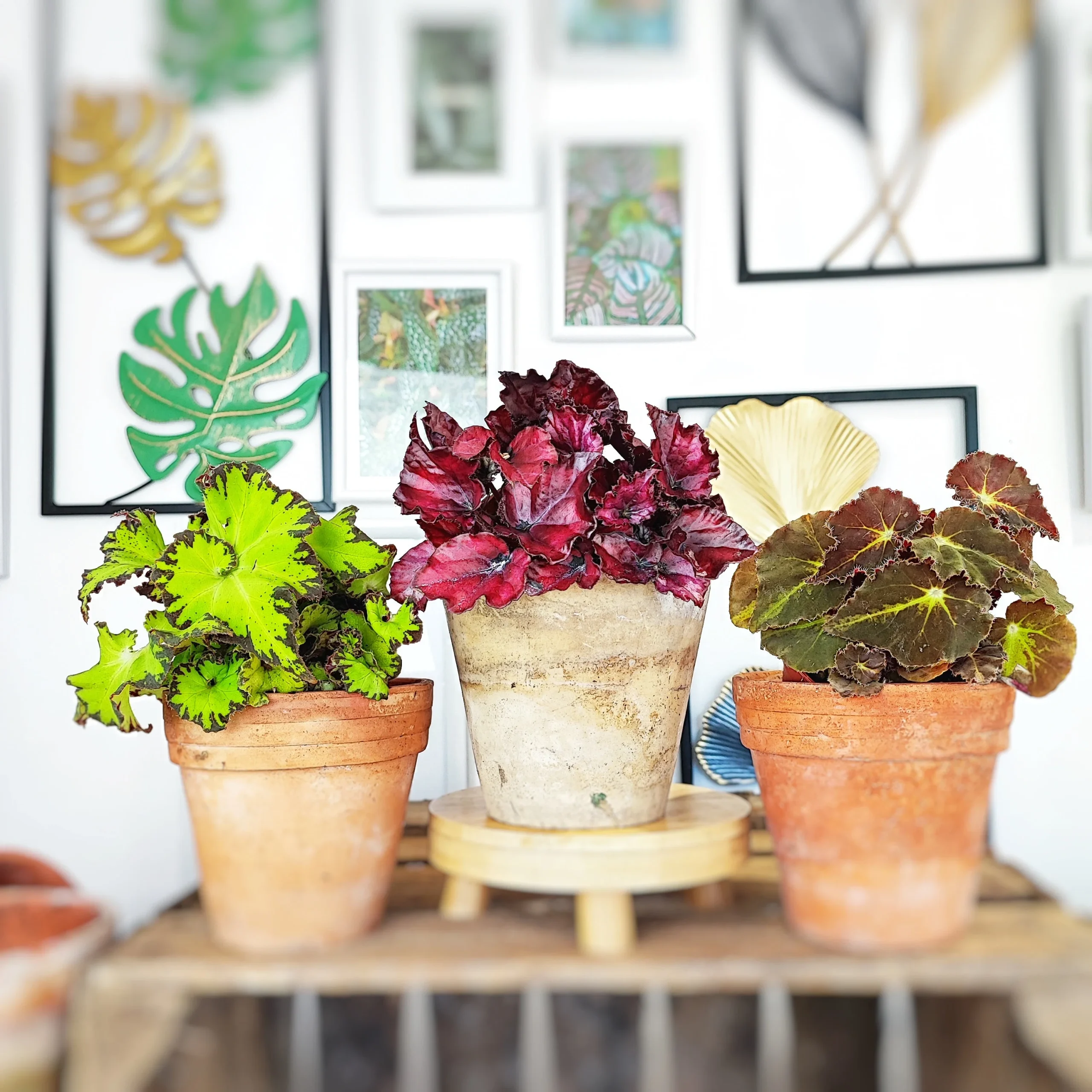
Some begonias are valued mainly for their flowers. Others, including many rex-type begonias, are grown primarily for their decorative foliage.
Common groups include:
- Wax begonias: Compact plants often used in containers and garden displays.
- Tuberous begonias: Known for large, attractive flowers and a preference for cooler conditions.
- Rex begonias: Grown mainly for colorful and patterned leaves.
- Cane begonias: Upright plants with strong stems and often dramatic foliage and flowers.
- Rhizomatous begonias: Often spread horizontally from thickened stems called rhizomes.
- Semperflorens begonias: Popular bedding and container plants that can flower for long periods under suitable conditions.
Because their requirements differ, identifying the type of begonia you have is useful before changing its care routine.
Why Begonias Are Popular
One reason gardeners keep coming back to begonias is their versatility.
A flowering variety can provide color without requiring a large garden. A foliage variety can become a striking indoor plant even when it is not in bloom. Many types also work well in containers, allowing you to move them when temperatures or light conditions change.
Begonias are particularly useful in spaces where direct afternoon sunlight is limited. However, “shade-loving” does not mean they should be kept in complete darkness. Most need bright, filtered, or indirect light to grow well.
Their variety is another major advantage. You can choose a plant based on flowers, foliage, size, growing habit, or the conditions available in your home or garden.
How Much Light Does a Begonia Need?
Light requirements vary by variety, but many begonia perform best in bright, indirect light or partial shade.
An indoor begonia can often do well near a bright window where it receives plenty of ambient light without being exposed to intense direct sun for long periods.
Too much strong sunlight may scorch delicate leaves, causing brown or faded patches. On the other hand, insufficient light can result in weak growth, smaller leaves, and fewer flowers.
A useful approach is to observe the plant rather than relying only on a fixed schedule. If the leaves appear bleached or scorched, reduce harsh direct exposure. If the plant becomes stretched and sparse, it may need a brighter position.
How to Water a Begonia
Watering is one of the most important parts of begonia care.
Begonias generally prefer consistently appropriate moisture rather than extreme cycles of drought and saturation. The soil should not remain permanently soggy.
Before watering, check the upper layer of the potting mix. If it has started to dry, water thoroughly enough to moisten the root zone, then allow excess water to drain away.
Avoid leaving a container sitting in water. Poor drainage keeps the roots wet for too long and can contribute to root problems.
At the same time, don’t assume that letting a begonia become completely dry is always harmless. Thin-leaved varieties and plants growing in warm, dry conditions may need more frequent attention.
The right frequency depends on the pot size, soil, temperature, humidity, plant size, and amount of light.
Choosing the Right Soil
Begonias generally benefit from a loose, well-draining growing medium.
A heavy soil that holds excessive water can create problems around the roots. A suitable container mix should retain some moisture while still allowing air and excess water to move through it.
For container plants, a quality general-purpose potting mix can work well when combined with good drainage. The container itself should have drainage holes.
If you frequently find that the soil remains wet for several days after watering, the issue may not be your watering technique. The potting mix may simply be too dense.
How to Plant a Begonia in a Container
Planting a begonia successfully is fairly straightforward.
1. Choose a Suitable Container
Select a container with drainage holes. Avoid choosing a very large pot for a small plant because excess soil can stay wet around the roots for longer.
2. Use Fresh Potting Mix
Fill the container with a well-draining mix suitable for container plants.
3. Position the Plant Carefully
Place the begonia at approximately the same depth at which it was previously growing. Avoid burying the stem or crown unnecessarily.
4. Water Thoroughly
After planting, water the soil evenly and allow excess water to drain.
5. Place It in Appropriate Light
Move the plant to a location with suitable light for its variety. Avoid exposing a newly moved plant to intense direct sunlight immediately.
Fertilizing Begonias
Begonias benefit from nutrients during active growth, but more fertilizer is not necessarily better.
A balanced fertilizer used according to its label can support healthy foliage and flowering. Plants growing actively in containers may require regular feeding because nutrients are gradually depleted from the potting mix.
Avoid applying concentrated fertilizer to dry soil. Overfertilizing can damage roots and may result in excessive foliage at the expense of balanced growth.
If the plant is struggling because of poor light, waterlogged soil, pests, or root damage, fertilizer is not a substitute for fixing the underlying problem.
Humidity and Temperature
Many begonias appreciate moderate to higher humidity, especially when grown indoors.
Dry indoor air can cause leaf edges to turn brown or become crispy. However, increasing humidity should not mean keeping the leaves constantly wet.
Good air circulation is equally important. Crowded plants and stagnant, humid conditions can increase the likelihood of fungal and bacterial problems.
Temperature preferences vary between varieties, but many begonias prefer warm conditions and can suffer when exposed to cold temperatures or sudden temperature changes.
Keep indoor plants away from cold drafts, air-conditioning vents, and heaters.
How to Propagate Begonias
Begonias can be propagated in several ways depending on the variety.
Leaf or Leaf-Cutting Propagation
Some foliage begonias can produce new plants from leaf sections or leaf cuttings. This method can be especially useful for suitable rex and related types.
Stem Cuttings
Stem cuttings are another common method. A healthy section of stem with suitable nodes can be placed in an appropriate propagation medium and kept under suitable moisture and humidity conditions.
Division
Some begonias that produce multiple growth points can be divided when repotting. Each section needs enough roots and healthy growth to establish successfully.
Not every begonia propagates equally well by every method, so the plant’s specific type matters.
Common Begonia Problems
Even healthy begonias can develop problems when their growing conditions are unsuitable.
Yellow Leaves
Yellow leaves can have several causes, including excessive moisture, aging foliage, poor light, or root problems.
Don’t automatically respond by adding fertilizer. Check the soil and roots first.
Brown Leaf Edges
Brown edges can occur because of dry air, inconsistent watering, excessive fertilizer, or environmental stress.
Look at the overall condition of the plant rather than treating the symptom alone.
Wilting
Wilting does not always mean the plant needs water. A plant with damaged or unhealthy roots may also wilt because the roots cannot function properly.
Check the soil before watering.
Leaf Spots
Spots can be associated with fungal or bacterial issues, environmental stress, or wet foliage combined with poor air circulation.
Remove badly damaged leaves and improve airflow. Avoid routinely wetting the foliage when watering.
Pests
Begonias may occasionally attract pests such as aphids, mealybugs, thrips, or spider mites.
Inspect the undersides of leaves and new growth regularly. Early detection makes pest management much easier.
Common Begonia Care Mistakes
Overwatering
This is one of the most common problems. Watering on a rigid daily schedule can keep the soil unnecessarily wet.
Instead, consider the plant’s actual conditions.
Ignoring Drainage
A pot without proper drainage can turn an otherwise manageable watering routine into a root problem.
Too Much Direct Sun
Some begonias tolerate more light than others, but intense direct sunlight can damage sensitive foliage.
Keeping the Plant Too Dark
Avoid assuming that every begonia wants deep shade. Many need bright filtered light for strong growth.
Using Too Much Fertilizer
Extra fertilizer does not automatically produce a healthier plant. Follow the product instructions and focus first on light, water, soil, and temperature.
Repotting Too Frequently
A plant does not need a larger container simply because some roots are visible. Repot when the plant has genuinely outgrown its container or the growing medium has deteriorated.
Expert Tips for Healthier Begonias
Check the soil before watering. This simple habit prevents many moisture-related problems.
Rotate indoor plants occasionally. Turning the pot helps growth remain more balanced when light comes primarily from one direction.
Remove damaged foliage. Dead or severely damaged leaves can be removed with clean tools.
Give plants room for airflow. Avoid packing multiple plants tightly together.
Learn your variety. A rex begonia and a tuberous begonia should not automatically be treated in exactly the same way.
Acclimate plants gradually. If a plant is moving from lower light to stronger light, make the transition gradually rather than exposing it to intense sunlight immediately.
Watch the plant’s response. Leaves, stems, soil moisture, and new growth provide useful clues about whether the current conditions are working.
Frequently Asked Questions About Begonia
Is begonia an indoor or outdoor plant?
It can be either. Many begonias are grown indoors as houseplants, while others are commonly grown outdoors in containers, garden beds, or hanging baskets. The best location depends on the specific variety and local climate.
Does begonia need direct sunlight?
Most begonias do not need prolonged intense direct sunlight. Many prefer bright, filtered light or partial shade, although some varieties can tolerate more sun than others.
How often should I water a begonia?
There is no universal schedule. Check the growing medium and water when appropriate for the plant’s conditions. The goal is to avoid both prolonged soggy soil and severe, repeated drying.
Why are my begonia leaves turning yellow?
Yellow leaves can result from overwatering, poor drainage, insufficient light, natural aging, or root problems. Check the soil moisture and overall growing conditions before changing your care routine.
Can begonia grow in shade?
Many begonias tolerate partial shade very well. However, complete darkness or extremely low light can lead to weak growth. Bright indirect or filtered light is often a better choice.
Can I grow begonia from a cutting?
Yes. Depending on the variety, begonias can be propagated from stem cuttings, leaf cuttings, leaf sections, or division.
Is begonia easy to grow?
Many varieties are relatively easy when their basic requirements are met. The main challenge is avoiding excessive moisture and providing the right amount of light for the particular variety.
When should I repot a begonia?
Repot when the plant has outgrown its current container, roots are significantly crowded, or the growing medium has broken down. Moving a plant into an unnecessarily large pot can make moisture management more difficult.
Final Thoughts
Begonia offers an impressive combination of attractive foliage, colorful flowers, and variety. The key to growing one successfully is not complicated: provide the right light, use well-draining soil, water thoughtfully, and pay attention to the plant’s response.
The most useful lesson is to treat each begonia according to its type rather than following a single care routine for every plant. Once you understand whether your variety prefers brighter light, higher humidity, drier conditions, or a particular growing cycle, caring for it becomes much easier.
With consistent conditions and a little observation, a healthy begonia can remain an attractive part of an indoor plant collection, patio display, or shaded garden for a long time.
About the Author